This roof coatings guide begins with the roof and the problem—not just the product.
When a roof begins to show its age, the first question is not always, “Which coating should we buy?”
A better question is, “What kind of solution makes sense for this roof?”
A roof coating may be one way to maintain or restore a compatible roof. It may also provide a protective or reflective finish. But a coating is not the right answer for every roof, and the wrong product cannot make up for trapped moisture, failed materials, open details, or poor drainage.
That is why a useful evaluation starts with the roof and the problem—not just the product.
This guide will help you understand what a coating may accomplish, what needs to be checked first, and how the main BULLDOG coating families differ in practical terms.
What this roof coatings guide can help you evaluate
“Roof coating” is a broad term. It describes products that are applied as a liquid, but those products do not all perform the same job.
Depending on the product and roof system, a coating may be used to:
- Maintain a compatible existing roof
- Restore a worn roofing surface
- Provide a protective finish
- Add a reflective surface
- Serve as one part of a reinforced resurfacing system
Some products are made for the broad field of the roof. Others are used to prepare the surface or address seams, flashings, fasteners, cracks, and penetrations.
The business question is not simply whether a coating exists. It is whether the roof is in suitable condition and whether the complete approach fits the problem you are trying to solve.
Five practical questions to ask first
1. What kind of roof do you have?
You do not need to be a roofing expert, but it helps to know what surface is in place. Common examples include built-up asphalt roofing, modified bitumen, metal, single-ply roofing, polyurethane foam, and previously coated roofs.
Roofing professionals may call this surface the substrate. In plain terms, it is the material the new product needs to bond to.
Different BULLDOG products are made for different surfaces. If you are unsure what is on the roof—or several materials and old repairs are visible—identify the roof before choosing a product.
2. Is the roof basically sound?
A coating is not a way to hide a larger roofing problem.
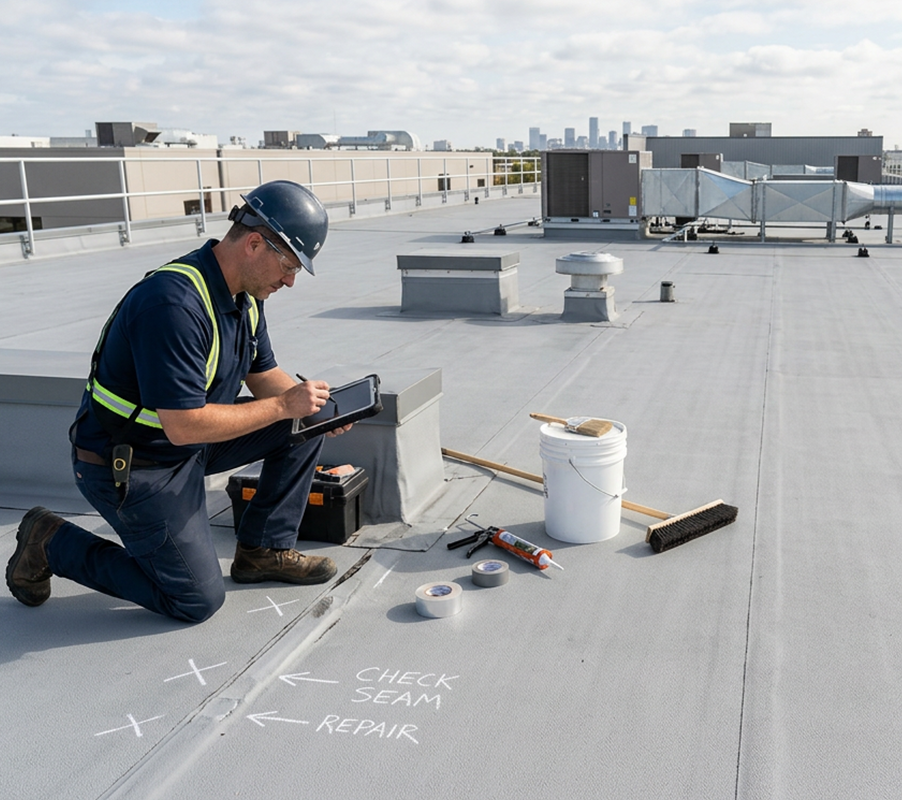
Look for loose or badly deteriorated material, open seams, damaged flashings, cracks, splits, and signs of moisture below the surface. Wet insulation or a failing roof section may need to be removed and replaced before a coating is considered.
This is one reason an assessment matters. It helps separate a roof that may be a candidate for maintenance or restoration from one that needs more substantial work.
3. Does water drain from the roof?
After it rains, check where water collects and how long it remains. Look at drains, scuppers, gutters, and obvious low areas.
Some BULLDOG products require adequate drainage or specifically exclude roofs where water ponds. Requirements differ by product, so there is no safe category-wide shortcut.
A coating may protect a suitable roof surface. It does not correct poor slope or drainage.
4. What has already been applied?
An existing roof may have an older coating, an aluminum finish, repair cement, patched seams, or several generations of roofing material.
Those layers matter because the new product must bond to what is actually there. Some BULLDOG products call for a primer, sealer, or small adhesion test—often called a pull test—before the full roof is coated.
If the existing material is unknown, do not assume the next coating will stick to it.
5. What outcome are you trying to achieve?
Are you trying to maintain a serviceable roof, address a worn asphalt surface, add a reflective finish, or evaluate a larger restoration system?
These are different goals. A product chosen for reflectivity may not address the same need as a resaturant for aged asphalt roofing or a reinforced resurfacing system.
Defining the goal early makes it easier to compare appropriate options instead of comparing unrelated products.
The main BULLDOG coating families—in everyday language
Asphalt roof coatings and restoration products
Asphalt products can serve several maintenance and restoration roles on compatible roofs.
Within the BULLDOG line, one asphalt coating is intended for periodic maintenance of built-up roofs, while another has listed uses as a protective coating or saturant. BULLDOG also offers an asphalt resaturant for a specific condition involving dried or deteriorated asphalt roofing felt, along with a cold-process coating used in reinforced resurfacing systems.
In other words, “black asphalt coating” is not a complete product description. The condition of the roof and the job the product is meant to perform still matter.
Asphalt emulsion coatings
An asphalt emulsion uses asphalt dispersed in water. BULLDOG Fibered Emulsion Roof Coating also contains reinforcing fibers and has listed uses in resurfacing and protection applications on specified surfaces.
It can also be used with polyester reinforcement as part of a cold-process resurfacing system.
Customers sometimes focus on the fact that an emulsion is water-dispersed. The more important questions are whether it suits the roof surface, preparation, weather, drainage, and complete system requirements.
Aluminum roof coatings
Aluminum roof coatings combine an asphaltic base with aluminum pigment to create a reflective finish.
BULLDOG Non-Fibered Aluminum Coating is listed for specified asphalt, modified bitumen, and metal roof surfaces. It may be relevant when reflectivity is part of the project goal.
The reflective finish does not remove the need to check roof condition, compatibility, preparation, weather, and drainage.
Silicone roof coatings
Silicone coatings are moisture-curing products used on specified roof surfaces and systems.
BULLDOG silicone coating data sheets place strong emphasis on cleaning, dry surfaces, compatibility, and testing where required. Some roof surfaces may also need a primer or sealer.
Silicone may be worth considering for an appropriate roof, but the word “silicone” does not establish that every silicone product will work on every roof or previous coating.
Do not overlook the details
The large open area of the roof is called the field. It is only one part of the roof.
Seams, flashings, fasteners, penetrations, curbs, parapets, cracks, splits, and transitions often need separate repair materials. Palmer manufactures BULLDOG flashing cement, reinforcing fabrics, and silicone patch products for specified detail work and compatible systems.
This matters because a field coating should not be expected to find and repair every leak source on its own. The detail materials and field coating need to be selected as parts of a compatible approach.
Is a roof coating the most cost-effective option?
That answer depends on the roof—not just the price of the coating.
A useful evaluation should consider:
- The roof’s current condition
- Moisture or damaged insulation
- Repairs needed before coating
- Cleaning, primer, or testing requirements
- Drainage problems
- The amount of detail work
- The intended maintenance or restoration goal
- The complete product and labor requirements
For a suitable roof, a coating or resurfacing system may be an option worth evaluating. For a roof with deeper problems, spending money on a coating without addressing the cause may not solve the business need.
Product price alone cannot tell you which path is more economical. Roof condition and total project scope have to be part of the conversation.
What information should you gather next?
Before speaking with a Palmer Asphalt representative or roofing professional, gather what you can:
- Photographs of the roof and problem areas
- The known roof type and approximate age
- Leak and repair history
- Areas where water remains after rain
- Known moisture or insulation concerns
- Information about previous coatings
- The result you hope to achieve
You do not need to have every technical answer. This information simply helps the conversation start in the right place.
Review the current BULLDOG product data sheet and any available safety document before selecting or using a product. For project-specific questions, consult Palmer Asphalt or an appropriate roofing professional.
Explore BULLDOG roof-coating options
Palmer Asphalt manufactures BULLDOG coatings and related preparation, repair, and reinforcement products for a range of specified roofing and building applications.
Start by exploring the BULLDOG roof-coating categories. Then review the data sheets for the options that appear relevant to your roof.
If you need help narrowing the choice, contact Palmer Asphalt and share what you know about the roof, the problem, and the result you are trying to achieve.
Frequently asked questions
Can every existing roof be coated?
No. The roof type, condition, moisture, drainage, existing materials, repair needs, and product requirements all affect whether coating is an appropriate option.
Will a roof coating stop an active leak?
Do not assume a field coating will locate or correct the source of a leak. Seams, flashings, penetrations, wet insulation, and damaged roofing may need investigation and compatible repairs first.
What does “substrate” mean?
The substrate is the existing surface beneath the new product. It may be a roof membrane, metal, asphalt roofing, concrete, or another listed surface. The coating must be approved for and able to bond to that surface.
Does every roof coating need a primer?
No. Primer requirements depend on the product, existing surface, and system. A primer also does not replace cleaning or necessary repairs.
Can a coating fix water that ponds on the roof?
A coating should not be treated as a correction for poor slope or drainage. Document where water remains and compare the condition with the exact product requirements.
How do I know which coating is the best value?
Compare the roof condition, required repairs and preparation, complete system requirements, and intended result. The lowest product price does not necessarily identify the most appropriate or cost-effective path for the roof.