A roof coating may be worth considering when a commercial roof is aging, showing wear, or creating recurring concerns. But can a roof be coated simply because it is still in place? Not necessarily.
The useful first step is not choosing a coating. It is understanding the roof, the problem you are trying to solve, and the work that may be needed before a coating can be considered.
This guide will help property managers, building owners, facility teams, and roofing contractors organize that conversation. It is not a remote approval of the roof or a replacement for an appropriate roof investigation.
Start with the problem you are trying to solve
Many roof projects begin with a simple report: a tenant noticed a leak, the roof looks worn, repairs are becoming more frequent, or the property team wants to plan before a larger interruption occurs.
Those concerns are important, but they do not yet explain what is happening on the roof. Before discussing products, clarify the business need:
- Are you responding to an active leak?
- Are repairs becoming more frequent?
- Is the goal to maintain a roof that is otherwise performing?
- Are you planning work before a lease, sale, or capital-budget decision?
- Is appearance, reflectivity, or another building objective part of the conversation?
A coating should not be expected to diagnose the source of a leak or correct every underlying condition. Defining the problem helps the property manager and roofing professional decide what needs to be investigated next.
Is the existing roof basically sound?
A coating becomes part of the existing roof. That makes the condition beneath it important.
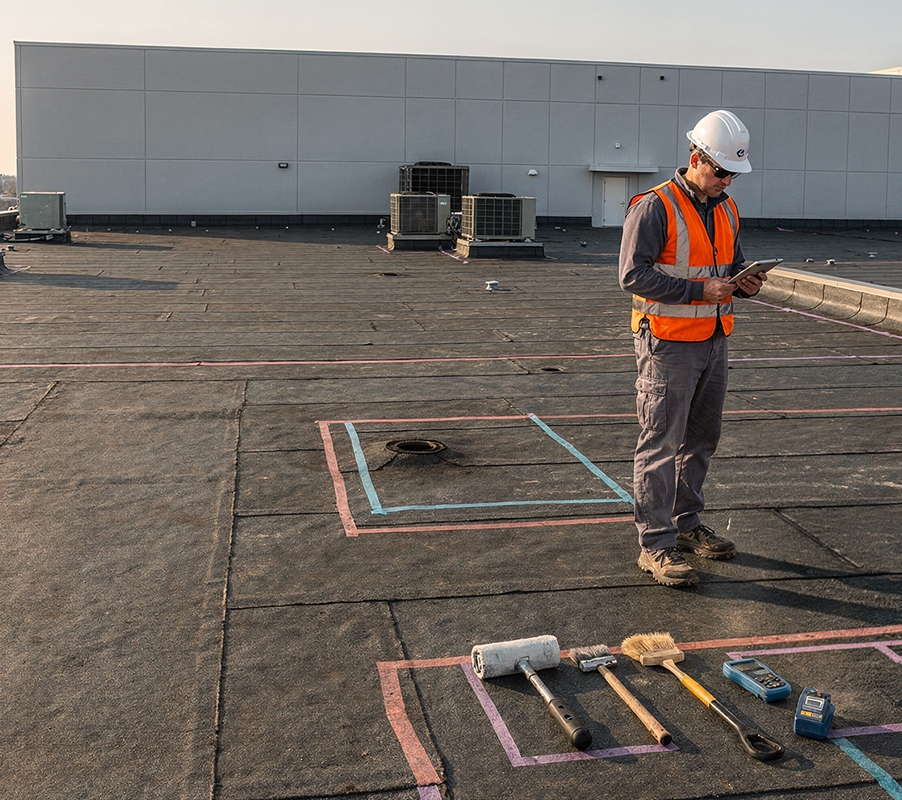
Look for areas that appear loose, badly deteriorated, blistered, split, or previously repaired. Note soft areas, visible damage, and places where the roof surface is no longer secure. If underlying materials are wet or failed, covering the surface may leave the more important problem unresolved.
Some BULLDOG product documents require a sound, clean surface and direct that areas containing wet insulation be removed and replaced with like material. The exact requirements depend on the product and roof. A roof that remains in service is not automatically a suitable coating candidate.
Check for moisture and damaged materials
Water entering the building is one sign of a problem, but it does not show the complete path or extent of moisture within the roof assembly.
Document interior leak locations, when they occur, and whether they appear after wind-driven rain, prolonged rain, or another condition. On the roof, record nearby seams, penetrations, drains, curbs, flashings, and previous repairs. A qualified roofing professional may recommend additional investigation when concealed moisture is a concern.
There is no single Palmer-wide moisture test or pass/fail threshold for every roof. The goal at this stage is to identify the concern and determine whether more investigation or removal of damaged materials is needed before product selection.
See how water leaves the roof
Drainage is part of the coating decision. After rain, look for blocked drains, debris, low areas, and places where water remains on the roof.
Several BULLDOG product sheets require adequate drainage, exclude roofs or surfaces that pond water, or identify ponding-related limitations. Those requirements vary by product. A coating should not be treated as a way to create slope or correct a drainage problem.
Record where water remains and discuss whether drainage work is needed. Then compare the observed condition with the current data sheet for the exact product under consideration.
Identify the roof surface and previous materials
The material already on the roof is sometimes called the substrate. It may be a roof membrane, metal, asphalt-based roofing, concrete, or another surface. Previous coatings and repairs also matter because the new material must be intended for and compatible with what is already there.
If the roof type is unknown, gather installation records, old invoices, warranty information, product labels, and photographs. Do not rely only on color or appearance. Different materials can look similar from a distance.
Depending on the BULLDOG product and substrate, the documents may call for a primer, sealer, adhesion test, manufacturer consultation, or another preparation step. A requirement listed for one coating should not be assumed to apply to every coating.
Inspect seams, flashings, penetrations, and repairs
The broad open area of a roof is only part of the system. Leaks and deterioration may involve:
- Seams and laps
- Flashings and transitions
- Fasteners
- Pipes and other penetrations
- Equipment curbs
- Parapets and roof edges
- Cracks, splits, and blisters
- Previous repair areas
These details may require compatible repair or reinforcement materials before the field coating is applied. Palmer Asphalt manufactures BULLDOG roof cements, patch products, and reinforcing materials for specified uses, but the appropriate repair depends on the roof and the coating system being considered.
Do not assume that applying a field coating over the entire roof will locate and repair every leak source.
Confirm cleaning, testing, and primer requirements
Preparation is not one universal checklist. The exact product sheet controls.
Depending on the product and existing surface, preparation may involve cleaning, removal of loose material or contaminants, repairs, drying, a primer or sealer, an adhesion test, and attention to weather conditions. Some BULLDOG products require a dry surface, while a product intended for a particular damp-surface application may state otherwise.
That difference is why broad rules such as “every roof must be completely dry” or “every coating needs a primer” are unreliable. Follow the current documents for the exact product and surface rather than carrying a requirement from one product into another system.
Compare the roof with the exact product documents
Once the roof conditions are documented, compare them with the current product data sheet. Pay particular attention to:
- Listed uses and surfaces
- Excluded surfaces or conditions
- Cleaning and preparation requirements
- Primer, sealer, or testing requirements
- Repair and reinforcement steps
- Drainage or ponding-water limitations
- Application-weather requirements
- Required sequencing with other materials
Review the available safety document before using a product. If the roof condition or compatibility is unclear, contact Palmer Asphalt or an appropriate roofing professional before proceeding.
Decide the next practical action
A pre-coating assessment should narrow the next step—not force the project toward a coating.
The practical outcome may be:
- Gather better roof records or photographs
- Investigate concealed moisture
- Correct drainage or maintenance problems
- Complete compatible detail repairs
- Confirm the roof surface and previous coating
- Perform testing required by the product documents
- Compare appropriate BULLDOG coating and preparation options
- Consider a different scope when the roof is not a reasonable coating candidate
When contacting Palmer Asphalt, share the roof type if known, approximate age, photographs, leak and repair history, drainage concerns, previous coatings, and the result you hope to achieve. You do not need to have every technical answer. Good information helps the conversation begin in the right place.
Need help identifying the next step? Contact Palmer Asphalt and tell us what you know about the roof and the problem you are trying to solve.
Frequently asked questions
Can an older roof still be coated?
Age alone does not answer the question. Existing roof condition, moisture or damaged materials, drainage, substrate, previous products, details, and the requirements of the proposed coating all matter.
Does a roof have to be completely dry before coating?
Many products require a dry surface, but requirements vary. At least one BULLDOG product permits a specified damp-surface application. Follow the current data sheet for the exact product rather than applying one rule to every coating.
Can coating solve an active roof leak?
Do not assume a field coating will identify or correct the leak source. Seams, flashings, penetrations, wet insulation, damaged roofing, or other conditions may need investigation and compatible repairs.
What if water remains on the roof after rain?
Document where water remains and check the exact product limitations. Several BULLDOG products require adequate drainage or exclude ponding conditions. A coating should not be treated as a way to create slope.
How do I know what type of roof surface I have?
Review installation records, invoices, warranties, product labels, and previous project information. If the surface remains uncertain, ask a qualified roofing professional to help identify it before selecting a product.
Is an adhesion test always required?
No universal requirement applies to every BULLDOG coating and surface. Some product documents recommend or require testing in specified situations. Follow the exact product data sheet.
Who should decide whether coating is appropriate?
The decision should be based on the observed roof conditions, appropriate investigation, project needs, and the requirements of the products being considered. Palmer Asphalt can help with BULLDOG product questions; a qualified roofing professional can help evaluate the roof and needed work.