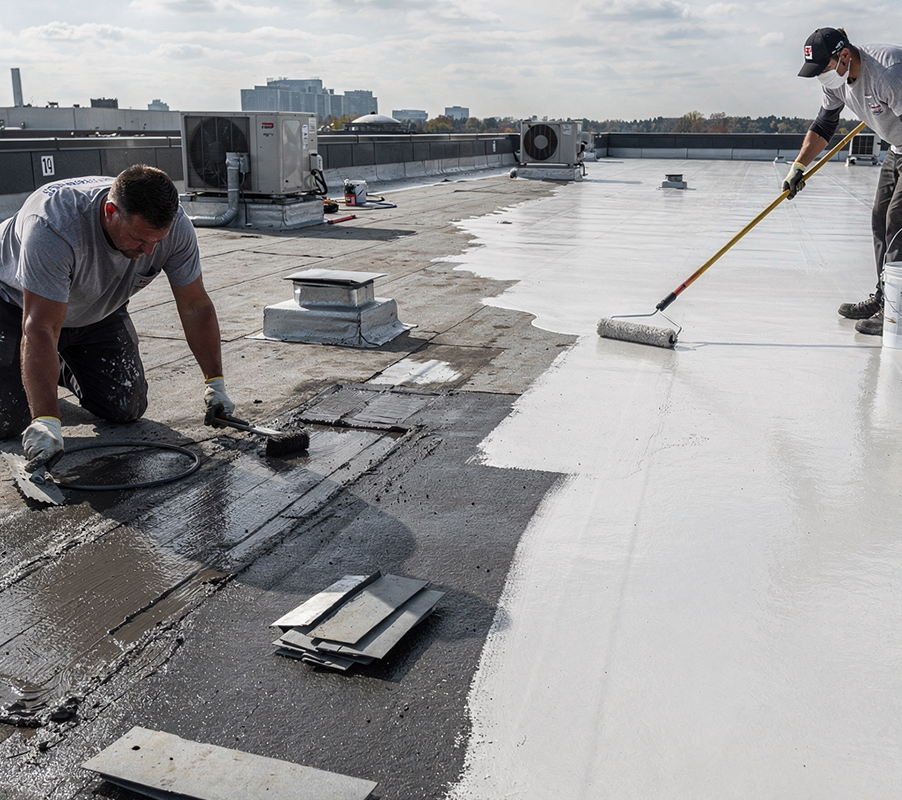
“Do I need a primer before coating this roof?” sounds like a yes-or-no question. The honest answer is: sometimes.
A roof coating primer may be required for a particular surface or coating system. In other situations, the coating may follow a different preparation path. The decision depends on the existing roof, the materials already there, and the exact products being considered.
That matters to contractors and property teams because adding an unnecessary step increases cost and labor. Skipping a required step can create a different set of problems. The practical goal is to identify what the complete system calls for before materials arrive on the roof.
Do you need a primer before coating a roof?
Do not make the decision from the word “coating” alone. Start with four pieces of information:
- The existing roof surface
- Previous coatings and repairs
- The new coating being considered
- The requirements in the current product data sheets
Some BULLDOG coating documents require a primer for a particular use. Others make primer dependent on the surface or direct the reader to consult Palmer Asphalt for the applicable preparation. A requirement from one product should not be carried into another system without documentation.
If the roof type or previous material is uncertain, pause the product decision. Installation records, invoices, product labels, photographs, and an appropriate roof investigation may help establish what is already there.
What a roof-coating primer can do
A primer is a preparation material used between a suitable existing surface and a compatible product or system. Depending on the exact product documents, it may serve one or more specific purposes.
Support bonding to a listed surface
BULLDOG #82 Asphalt Primer – Spec Grade and BULLDOG #85 Q.D. Primer are used on listed surfaces before compatible roofing, dampproofing, or waterproofing materials. Their data sheets describe bond-preparation roles, but their listed uses are not identical.
This is why “use an asphalt primer” is not a complete specification. The surface and the material being applied afterward still have to match the product documents.
Prepare a surface required by the coating system
The coating sheet may identify when primer is required, permitted, or dependent on the substrate. For example, one BULLDOG coating document requires asphalt primer, while another says a surface may be primed and specifically requires primer on metal.
The coating sheet and primer sheet should be read together. One identifies what the coating needs; the other explains the primer’s listed uses and requirements.
Address a documented bleed-through concern
Some asphalt materials can create a bleed-through concern beneath a subsequent compatible coating system. BULLDOG #A2 Primer/Silicone Coating Primer for Asphalt Roofs is documented for asphalt roof surfaces before #201LS BULLDOG Silicone Coating to limit asphalt-fraction bleed-through and promote adhesion for subsequent coatings.
That is a specific documented system—not permission to substitute another silicone coating. Until Palmer confirms otherwise, #A2 should not be assumed to serve beneath BULLDOG #203 or #205.
What primer cannot fix
Primer is not a substitute for understanding the roof.
It cannot clean the roof
Dirt, dust, loose material, oils, biological growth, and other contaminants can interfere with the work. Product documents commonly require a clean surface before primer or coating. Applying primer over contamination does not turn that surface into a properly prepared one.
It cannot repair failed roofing
Cracks, splits, open seams, damaged flashings, wet insulation, and deteriorated roofing may need investigation and compatible repairs. Primer is not a field coating, flashing cement, patch, reinforcing fabric, or replacement for failed material.
It cannot correct trapped moisture or poor drainage
A primer does not remove concealed moisture, create roof slope, or make standing water disappear. Those conditions belong in the roof assessment and project scope before the coating system is selected.
It cannot make incompatible products compatible
Adding a primer does not automatically make any coating work over any roof. The exact primer and coating must be intended for the surface and for use with each other.
It does not guarantee adhesion
Adhesion depends on more than whether primer is present. Surface condition, cleaning, moisture, existing materials, repairs, weather, application, sequencing, and product compatibility can all matter. Some BULLDOG coating sheets also recommend testing or consultation for specified surfaces.
Four questions that determine the primer decision
What is the existing roof surface?
The existing surface beneath the new material is often called the substrate. It may be asphalt roofing, metal, concrete, a single-ply membrane, a previous coating, or another listed surface.
Primer uses vary by substrate. BULLDOG #82 and #85 include listed asphalt, metal, concrete, or masonry uses, but the correct choice still depends on what follows and the complete system requirements.
What coating or repair material is already there?
Previous coatings and repairs can affect the next step. Do not identify them by color alone. Record product names when available and note areas where the existing material is loose, peeling, soft, cracked, or otherwise questionable.
If the existing material cannot be identified, Palmer Asphalt or an appropriate roofing professional may need more information before recommending a path.
What coating system is being considered?
Start with the coating data sheet, not with a primer chosen in isolation. Look for:
- Listed roof surfaces
- Excluded surfaces or conditions
- Cleaning and repair requirements
- Required or optional primer language
- Testing or consultation instructions
- Sequencing with other products
- Weather and application requirements
Then review the primer data sheet to confirm that its listed uses and requirements fit the proposed system.
Does the system identify bleed-through, testing, or bonding concerns?
These concerns are not interchangeable. A product intended to address bleed-through in one named system is not automatically a general-purpose primer. Likewise, an adhesion test does not replace cleaning, and a primer does not replace a test when the coating document calls for one.
Treat each requirement as part of the documented system rather than as a shortcut around another step.
How Palmer’s primer options differ
Palmer Asphalt manufactures several BULLDOG primer products for different preparation paths.
- BULLDOG #82 Asphalt Primer – Spec Grade is listed for specified metal and concrete roof-deck uses, asphalt roofs, and masonry before compatible asphaltic materials or systems.
- BULLDOG #85 Q.D. Primer is listed for concrete, asphalt, and metal before compatible BULLDOG dampproofing and waterproofing compounds and systems. Its data sheet positions it as a quicker-drying option.
- BULLDOG #A2 Primer/Silicone Coating Primer for Asphalt Roofs is a two-component primer documented for the asphalt/#201LS silicone-coating context described in its data sheet.
These short descriptions help identify which documents to review. They are not a product-selection shortcut, and they do not replace the complete data sheets.
Read the coating sheet and primer sheet together
Before selecting or using a primer, confirm:
- The roof surface and previous materials are identified
- The roof’s condition and moisture concerns have been evaluated
- Needed repairs are part of the scope
- The coating sheet identifies the applicable primer path
- The primer sheet lists the intended surface and compatible use
- Testing or consultation requirements have been addressed
- Product-specific preparation, weather, mixing, application, and sequencing instructions are understood
- The current product data sheet and any available safety document have been reviewed
For BULLDOG #A2, review the available data sheet before selection or use.
Decide the next practical action
If the coating sheet clearly identifies a primer and the roof matches the documented conditions, the next step is to review the complete product requirements and project scope.
If the surface, previous coating, or system is uncertain, gather photographs, product records, roof history, and the coating being considered. A short conversation before material selection can help avoid an unsupported substitution or an unnecessary step.
Need help matching the roof, primer, and coating documents? Contact Palmer Asphalt and share what you know about the existing roof and the system being considered.
Frequently asked questions
Does every roof coating need a primer?
No. Primer requirements vary by coating, substrate, existing materials, and system. Follow the current coating and primer data sheets rather than assuming primer is always required.
Can primer make a dirty roof ready for coating?
No. Primer does not replace required cleaning or removal of loose material and contaminants. The surface-preparation requirements for the exact products still apply.
Is an asphalt primer the same as a silicone-system primer?
No. Product chemistry and listed uses differ. BULLDOG #82 and #85 are asphalt primers for specified uses. BULLDOG #A2 is a two-component primer documented for a particular asphalt/#201LS silicone-coating context.
Can primer stop asphalt bleed-through?
A primer may address bleed-through when the documented system says it does. BULLDOG #A2 has that role in its named #201LS system. Do not extend that claim to another coating without Palmer confirmation.
Does primer guarantee adhesion?
No. Adhesion also depends on the roof surface, condition, cleaning, moisture, previous materials, repairs, weather, application, sequencing, and compatibility. Follow any testing or consultation requirement in the coating sheet.
How do I know which primer belongs with a coating?
Begin with the current coating data sheet. Identify the roof surface and preparation requirements, then review the listed primer document. Contact Palmer Asphalt when the surface, existing materials, or system pairing is uncertain.