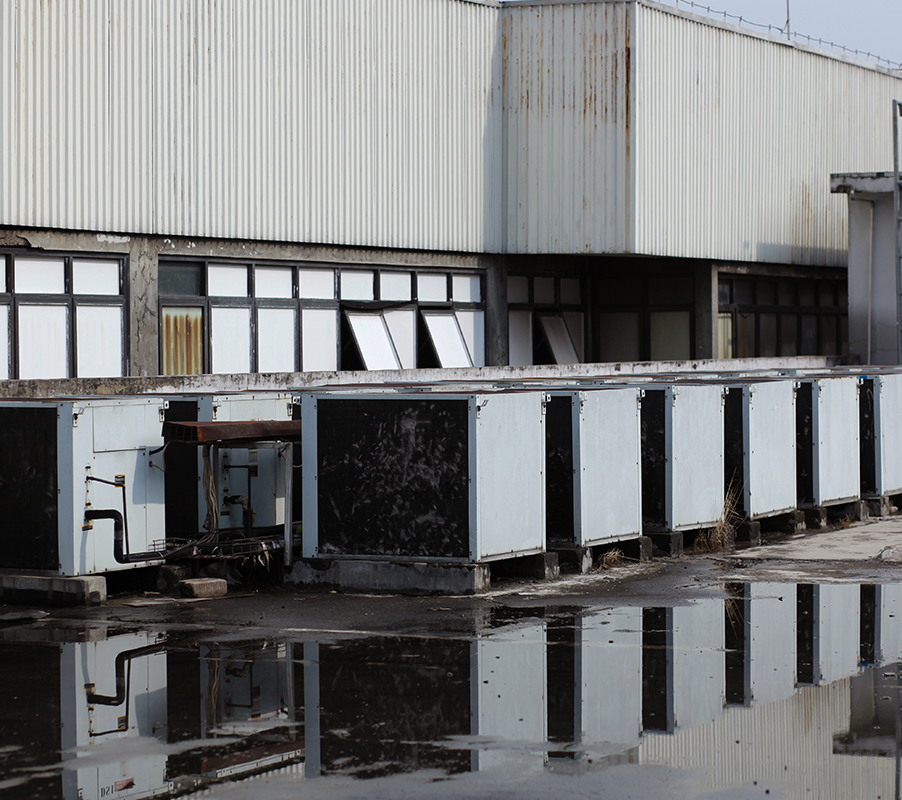
If water remains in the same roof areas after rainfall, ponding water before roof coating needs to be evaluated as more than a surface-preparation issue. The water may point to blocked drainage, a low area, structural movement, compressed insulation, equipment that interrupts the drainage path, or a combination of conditions.
A coating can protect a compatible, properly prepared roof surface. It cannot create slope, relocate a drain, correct structural deflection, or remove moisture trapped beneath the roofing.
The useful first step is to document what is happening and determine which problem—or problems—must be addressed before a coating system is selected.
What ponding water means during a roof assessment
“Ponding” generally describes water that remains in low areas of a roof instead of moving toward drains, scuppers, gutters, or another designed outlet. However, one elapsed-time rule should not be applied automatically to every roof, coating, specification, or warranty.
Drying conditions, rainfall, roof design, system type, product requirements, and warranty language all matter. A photograph taken shortly after a storm provides different information than water repeatedly documented in the same location long after surrounding areas have dried.
The important question is not simply, “Is there water?” It is, “Why does water remain here, what materials may be affected, and what does the proposed coating system permit?”
Drainage and concealed moisture are separate questions
Standing water is visible on the roof surface. Concealed moisture may be present within insulation, cover board, or other parts of the roof assembly. One does not automatically prove the other.
A roof can drain poorly without having wet insulation. It can also contain concealed moisture even when no puddle is visible during a particular visit. Leak history, surface condition, previous repairs, interior signs, and appropriate moisture investigation may all contribute to the evaluation.
This distinction matters because covering a surface does not remove wet material below it. For example, the data sheet for #109AF BULLDOG Asphalt Roof Resaturant says areas that may contain wet roof insulation should be removed and replaced with like material. That is an evaluation boundary, not a conclusion that can be reached from a surface photograph alone.
Ponding water before roof coating: what to document
A useful record helps a property manager, contractor, and product representative discuss the same condition. If roof access is authorized and safe, document the following. Otherwise, engage a qualified roofing professional.
Location and size of the affected area
Mark the area on a roof plan or simple roof-zone sketch. Include an overview photograph that shows the water in relation to walls, equipment, curbs, drains, and other recognizable features. Add a closer photograph showing the surface condition at the edge of the water.
Drains, scuppers, gutters, and overflow paths
Photograph the closest primary and secondary drainage features. Note visible debris, sediment, vegetation, damaged strainers, displaced components, or equipment and supports that may interrupt the drainage path.
Do not remove components or alter drainage based solely on the inspection. Roof drainage can involve structural, roofing, and plumbing considerations that require professional coordination.
Weather and timing
Record when the rainfall ended, when the photographs were taken, and whether conditions were favorable for drying. If possible, compare the same area over time rather than relying on a single visit.
A repeated record is especially useful because it shows whether the area drains slowly, remains consistently wet, or changes after drains are serviced or weather patterns differ.
Surface condition and nearby roof details
Observe the membrane or coating around the affected area. Look for visible cracks, splits, open seams, displaced materials, blisters, deteriorated coating, or previous patches. Pay particular attention to flashings, penetrations, fasteners, and curbs near the water.
Our guide to repairing roof details before coating explains why seams, flashings, penetrations, and other transitions need separate evaluation and compatible repair materials.
Interior signs and leak history
Include known leak locations, dates, weather conditions, interior staining, damp ceiling materials, recurring odors, and previous repair reports. Water may travel before appearing inside the building, so an interior stain should begin an investigation rather than identify the exact opening by itself.
The commercial roof maintenance checklist provides a repeatable structure for photographs, roof zones, drainage observations, and follow-up records.
Why roof-coating limits differ
Roof coatings are not one interchangeable product category. Chemistry, substrate, roof condition, system design, application requirements, and warranty terms can all change how a product is used.
Several BULLDOG product documents provide clear examples:
- #36 BULLDOG Non-Fibered Aluminum Coating is not to be applied to roofs that pond water.
- #111AF BULLDOG Cold Process Coating is documented for systems on roofs with adequate drainage that do not pond water.
- #401AF BULLDOG Fibered Emulsion Roof Coating is not to be used on surfaces that pond water.
These are not generic opinions about every coating. They are product-specific instructions that illustrate why the exact current data sheet must be reviewed before materials are selected.
Silicone does not make drainage irrelevant
Silicone is sometimes discussed as though it eliminates every standing-water concern. The BULLDOG documents do not support that broad conclusion.
#203 HS BULLDOG High Solids Silicone Coating is not recommended for continuous immersion, and Palmer’s data sheet states that damage due to ponding water is not covered. #205 BULLDOG One Coat Silicone Roof Coating contains its own immersion, existing-moisture, preparation, and warranty boundaries.
The appropriate conclusion is not that silicone can never be considered, or that it automatically solves the condition. The roof, drainage, moisture, substrate, preparation, exact product, and warranty requirements need to be reviewed together.
A roof coating is not slope correction
A field coating follows the existing shape of the roof. It does not raise a low area enough to create a designed drainage path, change the structural deck, or reposition drains and scuppers.
Potential drainage corrections may involve cleaning or repairing drainage components, adjusting roof details, adding or modifying drains, addressing deck or structural conditions, or using a professionally designed slope-to-drain approach. The appropriate solution depends on the building and roof assembly.
Those decisions may require a roofing contractor, roof-system designer, structural professional, plumbing professional, or other qualified party. They should not be reduced to a coating recommendation.
Questions to answer before selecting a coating
- What type of roof and existing coating are present?
- Where does water remain, and where are the nearest drains or scuppers?
- Is the condition new, recurring, or changing?
- Are drains clear and functioning as designed?
- Are seams, flashings, curbs, penetrations, or previous repairs involved?
- Is there an active leak or reason to suspect concealed moisture?
- Does the roof otherwise qualify for repair or restoration?
- What does the exact product data sheet say about ponding, immersion, moisture, substrate, and preparation?
- Do project specifications or warranty requirements impose additional limits?
If the broader coating decision has not been evaluated, start with the practical pre-coating roof assessment. It explains how roof type, moisture, drainage, existing damage, adhesion, and compatible preparation affect qualification.
Frequently asked questions
Can a roof coating fix ponding water?
A coating does not create slope or change the drainage design. The cause and extent of the standing water should be evaluated before coating selection.
Does silicone roof coating solve standing-water problems?
Do not make that assumption. BULLDOG silicone products have specific ponding, immersion, moisture, preparation, and warranty language. The exact product and project conditions control.
How long can water remain before it is considered ponding?
Industry references and project documents may use time-based criteria, but one duration should not be treated as universal. Review the roof system, weather and drying conditions, product data sheet, specifications, and applicable warranty.
Does standing water mean the insulation is wet?
No. Surface water does not prove concealed moisture. Leak history, interior signs, roof condition, and appropriate moisture investigation may be needed.
Can a roof be coated after a drainage problem is corrected?
Potentially, if the roof is otherwise a suitable candidate and the repairs, moisture condition, preparation, product compatibility, and project requirements are all addressed.
Send Palmer Asphalt the information needed for review
A productive conversation about ponding water before roof coating begins with facts rather than a product assumption. Gather the roof type, photographs after rainfall, drainage locations, timing, known leak history, previous repairs or coatings, and the coating system being considered.
Contact Palmer Asphalt with that information. The clearer the roof condition and maintenance goal are, the more useful the product-selection conversation can be.